Inspect domains and URLs
Move from domain trends to the exact URLs and answers where each source appeared.

Measure source retrieval and citations by prompt, surface, and market so your team can prioritize content, outreach, directories, reviews, and partnerships.
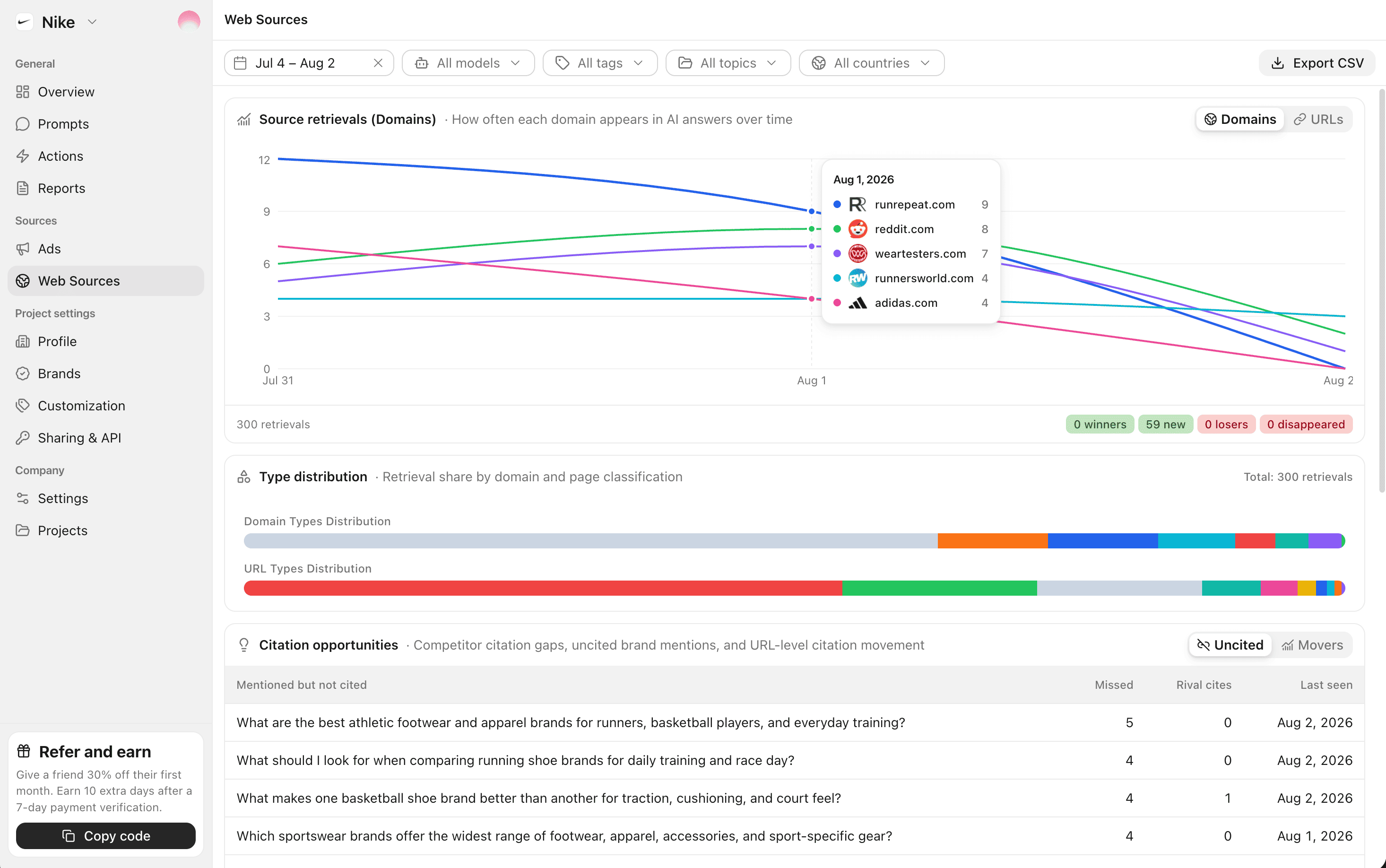
Use repeated source evidence to decide whether the next move belongs in owned content or earned distribution.
Move from domain trends to the exact URLs and answers where each source appeared.
Compare source presence with brand mentions and recommendation outcomes in the same observations.
Run a stable prompt library daily across the AI surfaces and markets that matter.
Inspect the domains and URLs returned with an answer and compare their presence across prompts.
Turn evidence repeated across prompts, surfaces, and dates into concrete owned and earned work.
Move from a domain count to the exact pages, retrieval context, and answers shaping brand discovery.
Latentline distinguishes retrieved sources from citations when the AI surface provides enough structure to do so. Reports retain the source type, URL, domain, retrieval order, citation evidence, prompt, model, country, and answer context.
Yes. Teams can create their own domain and URL types, merge classifications, and use those categories to analyze the source mix relevant to content, PR, community, review, directory, and partnership work.
When a supported surface exposes generated or expanded search queries, Latentline stores those fan-outs with their kind, position, capture status, prompt, and answer. Availability depends on the monitored surface and response.
Choose the prompts, AI surfaces, competitors, and markets that matter. Latentline will preserve the evidence and show your team what to address next.